5 EMG Electrode Pairs
Five sensing sites capture muscle intent across the residual limb providing data to the prosthesis for better control.
Wearable
The first step to natural control is to bridge the data gap between the body and the prosthesis. We do this by capturing muscle activity and translating it into intuitive, real-time prosthetic control.
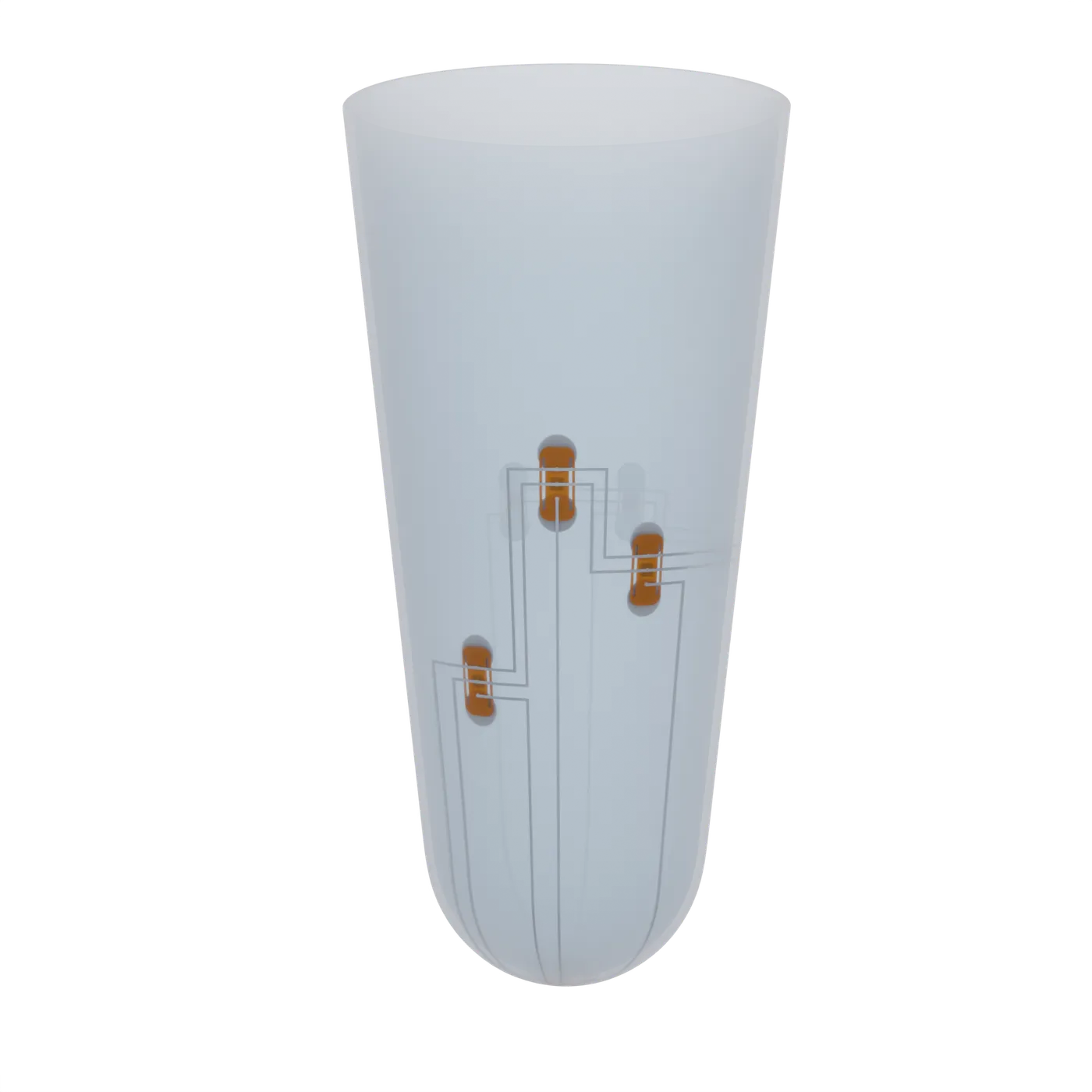
Silicone
Soft liner bodyLiquid Metal
Stretchable tracesCircuit Chip
Embedded sensing circuit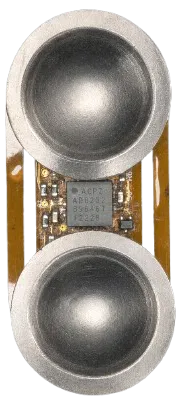
Features
Five sensing sites capture muscle intent across the residual limb providing data to the prosthesis for better control.
Self-healing conductive pathways designed to bend and stretch with the liner, supporting repeated daily wear.
The sensing layer is built into the liner so the interface can stay comfortable and fit the standard prosthetic setup.
How It Works
1. Muscle Intent
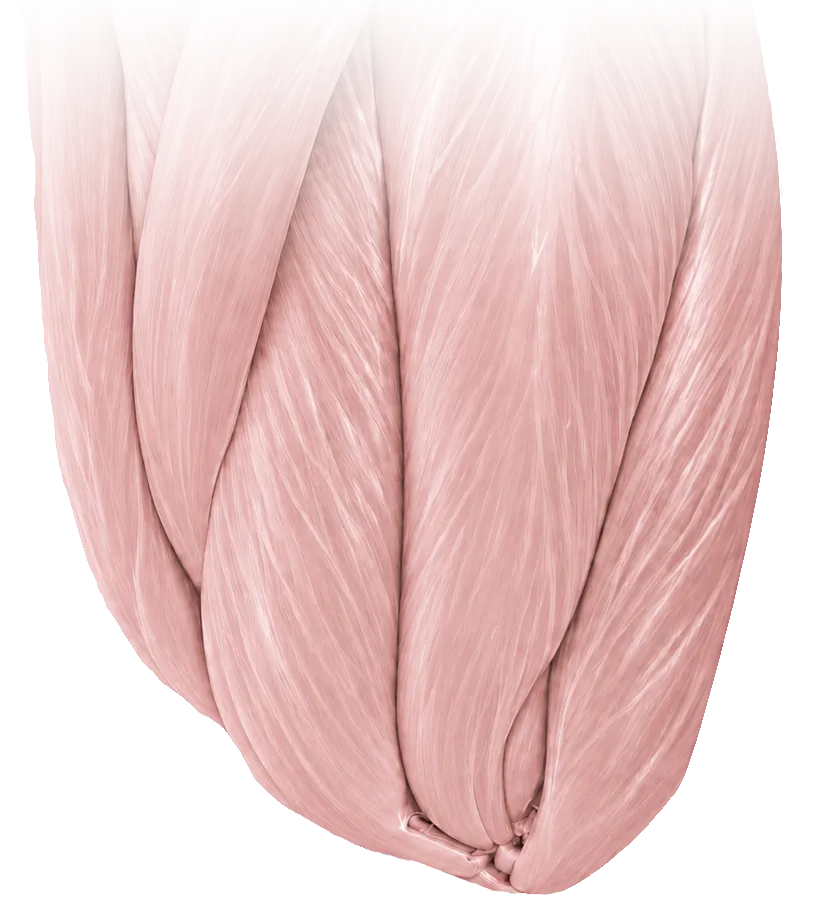
When a user intends to move, their residual muscles generate Electromyography (EMG) signals much as they did before amputation.
2. EMG Signals
The liner captures EMG channels from all major muscle groups across the residual limb.
3. Interpretation
Machine learning models maps EMG signals into a real-time intent driven knee movement.
4. Prosthetic Control
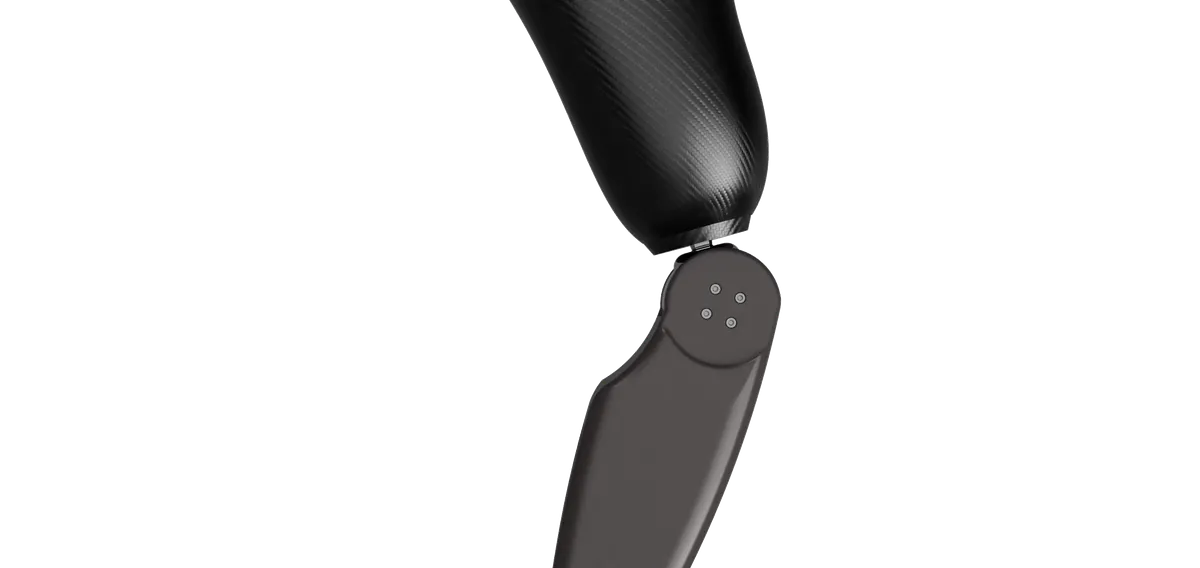
The prosthetic knee moves into the desired position before compensatory movements are required.